
If you want to get a sense of how local grain farmers are feeling these days, just talk to George Mielke of Trenton Mill Farms in Maryland.
“It’s been a tough year,” he says. “We have fought weather, and we have fought low prices. I don’t know if I’ve seen a year with this many problems.”
Combines have been rolling the past couple of weeks, and results have been abysmal in some cases.
“We have seen ugly, and real ugly, corn on Delmarva,” says Mark Sultenfuss, crop insurance agent and agronomist with Nagel Farm Service. “We have reports of corn with less than 25-bushel-yield appraisals by crop insurance adjusters; corn that has been rejected by grain elevators due to aflatoxin; corn sprouting on the cob; ears so small that they pull through the corn head and don’t go into the combine. Stress brings out the worst in crops, livestock and people. We’ve seen it all this year.”
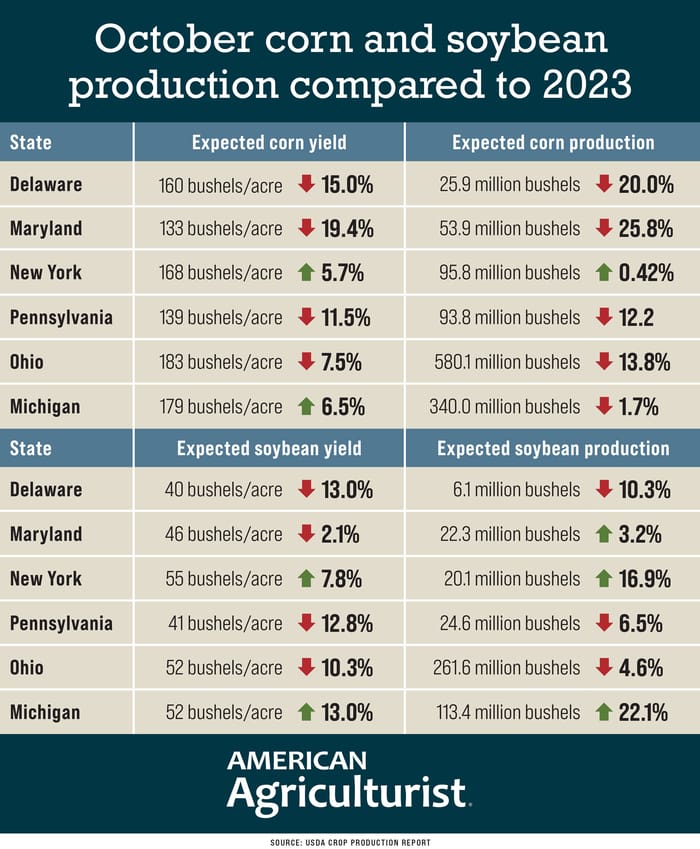
Last week’s USDA Crop Production Report showed lower corn yields from the September report in Delaware, Maryland, Michigan and Ohio, with New York and Pennsylvania unchanged.
Soybean yields were adjusted lower in Delaware, Maryland, Ohio and Pennsylvania, but New York and Michigan have been adjusted higher.
Soybean yields were adjusted lower in Delaware, Maryland, Ohio and Pennsylvania, but New York and Michigan have been adjusted higher.
Rots, sprouts and drought
Mielke, who owns two grain elevators in Maryland, says aflatoxin, a result of crop stress and drought, has been an issue in many loads he has seen.
“That transfers to the grain. It’s had an ill effect on the grain,” he says. “We’re working with very low yields in some areas, and that’s really hit and miss. There are yields with a wide scope, but in general, way under what normal is.”
He says soybeans have been delivered black or purple and, in some cases, with sprouting. While most processors can handle these imperfect beans — converting them to soymeal or oil — soybean exporters, of which there are several local farmers doing this, might be hampered by it.
Recent rains have led to some issues with ear rot and sprouted soybeans in Pennsylvania.
“After recent rains, we're seeing some sprouting soybeans as well as corn impacted by ear rot. These issues vary across our region due to differences in rainfall and crop maturity,” posted Eric Rosenbaum of Rosetree Consulting on the company’s Facebook page earlier this week. Rosenbaum works with more than 300 farms in Pennsylvania covering about 75,000 acres.
Here’s what to watch for and manage:
Soybeans. Expect sprouted seeds to shatter during harvest. Dry affected beans to limit fungal growth and store them for as short a time as possible, and deliver as soon as possible.
Corn.