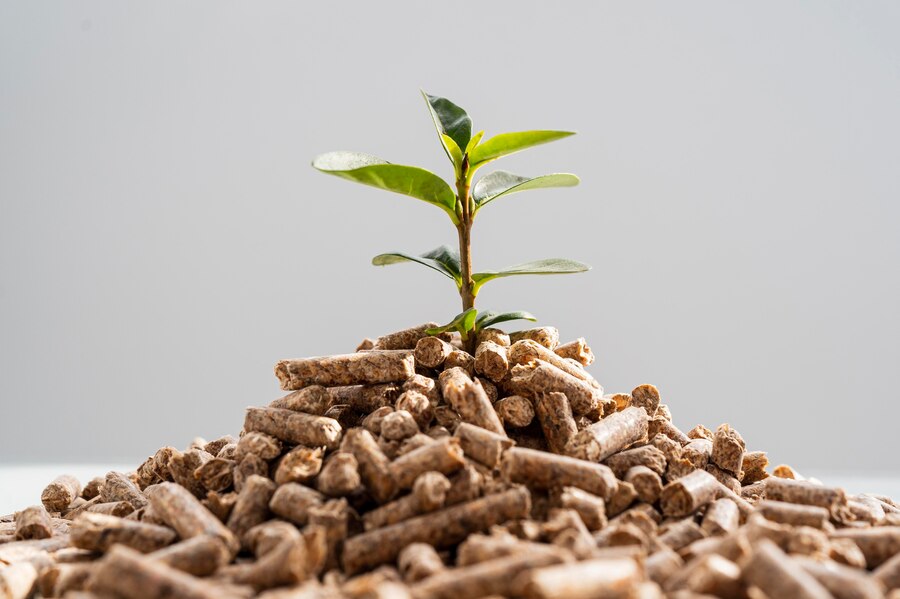
Patiala: Even though the use of biomass pellets for blending purposes in power generation was proposed as a potential solution to the issue of paddy straw burning and its detrimental impact on the environment, particularly in the National Capital Region (NCR), the inflated per unit production cost has rendered it unviable for the Punjab State Power Corporation Limited (PSPCL). Therefore, the officials have urged the central govt to provide a subsidy for setting up paddy straw-based biomass power projects in Punjab.
During a meeting held with the Union power minister last month, the PSPCL officials suggested 100% viability gap funding (VGF) for paddy straw-based biomass power projects, to address the financial challenges associated with the utilisation of paddy straw for power generation, thereby promoting a sustainable and environmentally friendly approach.
"The central govt has been providing viability gap funding to the tune of Rs 4 crores per 4.8 TPD capacity for paddy straw-based compressed biogas (CBG) projects. Currently, there is no subsidy for paddy straw biomass power projects, which have a tariff of Rs 7.50 per unit against the average power purchase cost of Rs 5. The gap of Rs 2.50 per unit needs to be addressed. To bridge this gap, the central govt should provide a subsidy of Rs 5 crores per MW as capital cost, akin to the support extended to CBG plants. For instance, the govt would have to give Rs 500 crores subsidy for a 100 MW paddy straw-based biomass power project, following which the plant would be able to provide power at Rs 5 per unit. Currently, the PSPCL is buying power from some biomass power projects at an average cost of Rs 7.5 per unit. Punjab power consumers can benefit as the PSPCL will be able to save Rs 175 crore annually by getting power at Rs 5 per unit from such a biomass power plant," said a PSPCL senior officer.
He added that, besides, it will promote the utilisation of paddy straw, thereby mitigating the environmental hazards associated with its burning. Secondly, it will provide an additional income stream for farmers, contributing to their economic well-being. Thirdly, it would generate employment opportunities, fostering socio-economic development in the region.
According to PSPCL's calculations last year, the additional liability resulting from the use of biomass pellets worked out to be Rs 100 crore per 1 lakh tonne of biomass torrefied pellets. For the use of 5% torrefied pellets at the Talwandi Sabo Power Limited (TSPL) Mansa plant, approximately 3 lakh tonnes of pellets are required, resulting in an additional liability of Rs 300 crore. Furthermore, the use of biomass pellets at thermal plants require capital investment in plant-end machinery, additional arrangements for storage and handling, and the installation of specific equipment such as conveyor belt systems/loaders for efficient operation.
While the use of 5% co-firing of biomass pellets in Punjab's thermal power plants can only consume about 9 lakh MT of pellets against the annual production of approximately 200 lakh tonnes of paddy straw, it would result in an additional annual financial burden of more than Rs 500 crore.
MSID:: 116803212 413 |